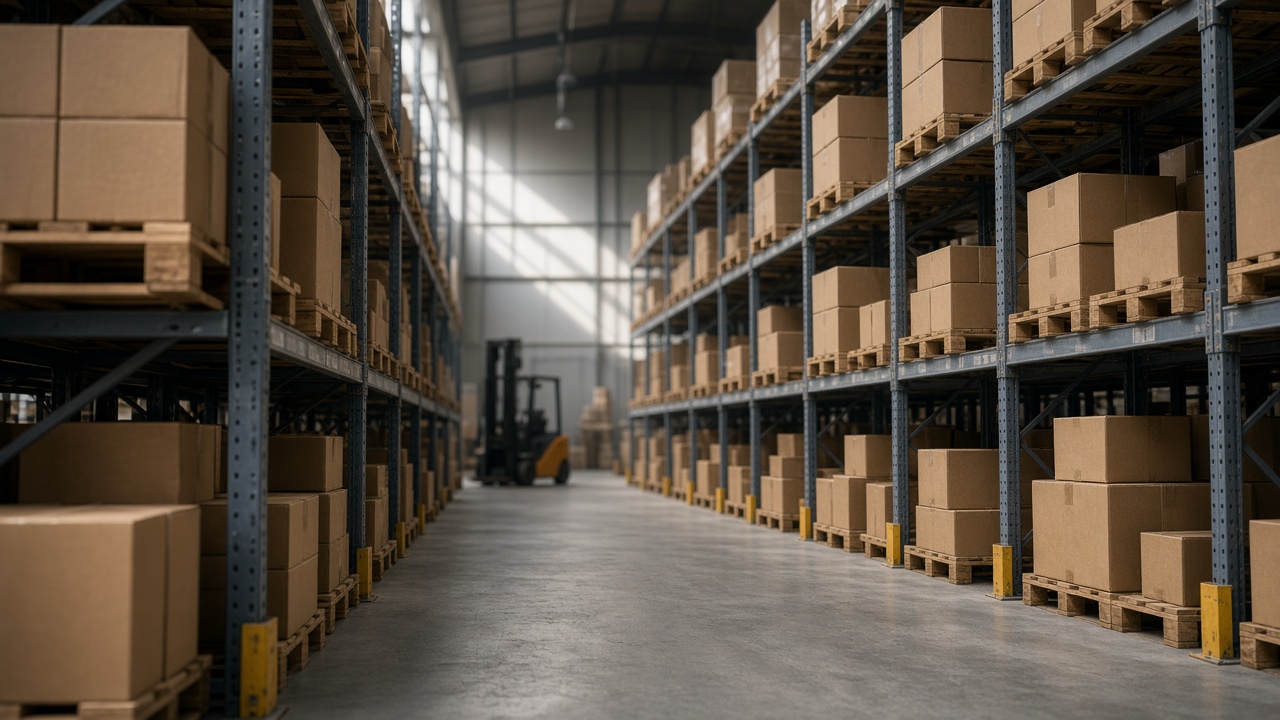
Contract logistics is not a niche side option: industry surveys show most supply-chain leaders already outsource parts of logistics, and 61% outsource warehouse operations specifically. European B2C e-commerce also returned to growth in 2024, with turnover rising to €842 billion — more volume that has to be stored, picked and moved without breaking the brand promise.
If you own inventory for retail or e-commerce across Southeast Europe and the Middle East, the decision is not “3PL or nothing”. It is whether your current space, people and systems can absorb peaks without damaging service levels — and whether one operating model can cover the markets you sell in.
Why warehouse outsourcing is on the table
Outsourcing warehouse work is usually driven by focus and capacity, not slogans. In the same survey, the top cited benefit of logistics outsourcing was the ability to focus on the core business (58%), followed by efficiency and productivity (43%) and cost reduction (41%). Those are management outcomes you can test against your own P&L and OTIF data.
Delivery experience compounds the warehouse decision. Ipsos reports that 85% of online shoppers say a poor delivery experience would stop them ordering from that retailer again — and fulfilment quality starts with how stock is stored and prepared.
What good warehouse outsourcing looks like
- Clear SKU master and location rules (including clean-area or hand-finish needs).
- Documented inbound, storage, pick, pack and outbound SLAs with measurable KPIs.
- Capacity plan for peaks (seasonality, launches, promo packs) without emergency overtime as the default.
- Access control, inventory accuracy checks and exception handling that your team can audit.
- Transport interfaces that match how you actually ship — not a generic brochure route list.
Questions to ask before you brief a partner
- Which processes must stay in-house for quality, security or brand reasons?
- What is the true cost of current space, labour variance and stock errors over 12 months?
- Do you need specialised zones (clean area, promotional kits, temperature or packaging constraints)?
- How will systems talk — WMS/ERP messages, ASN, inventory feeds, returns?
- What happens on day-two exceptions: short picks, damages, urgent cut-offs?
How Dcode fits this decision
Dcode coordinates warehouse capacity through Care Direct partner sites — guarded, 24×7 facilities from 100 to 2,000 sq.m. with clear heights up to 12 m across Greece, UAE, KSA, Oman, Bahrain, Kuwait, Egypt, Romania, Bulgaria and Cyprus. Storage, repacking, clean-area work, logistics and transportation sit under one brief matched to market and specification. When you are ready to brief, use the warehouse partner checklist.
Next step: review the warehouse services page and send a short brief (SKU profile, volumes, peak calendar, special handling). We will respond with a practical operating setup.